Short-Term Rentals in Buenos Aires for Long Stays: How to Choose Well and Live the City Without Friction
Staying in Buenos Aires for several months is very different from visiting for just a few days. When a stay is extended, accommodation stops being simply a place to sleep and becomes an active part of daily life: working, studying, cooking, resting, moving around the city, and in many cases maintaining a routine quite similar to that of a local resident.
In that context, short-term apartment rentals become an especially attractive option for long stays. They offer more flexibility than a traditional lease and far more autonomy than a hotel—something essential for people coming for remote work, temporary job relocation, studies, extended medical treatments, or personal projects.
In this guide, we explain what to consider when choosing a short-term rental in Buenos Aires if your plan is not to stay for a week, but for several months.
What is considered a long stay in short-term rentals?
In practice, long stays are generally considered rentals that go beyond one month and extend for periods of two, three, six months, or even longer. This format is very common in Buenos Aires and responds to clearly defined profiles:
- Professionals arriving for project-based work or temporary relocation
- University or graduate students
- People from other regions or countries undergoing medical treatments
- Couples testing life in the city before making a long-term decision
- Remote workers and digital nomads who choose Buenos Aires as a base due to its cost of living, connectivity, and urban offerings
Unlike traditional rentals, short-term arrangements allow people to move in and out without being tied to two- or three-year contracts—an important advantage when plans are still flexible.
Why short-term rentals work better than hotels for long stays
When a stay is measured in months, hotel life quickly starts to wear thin.
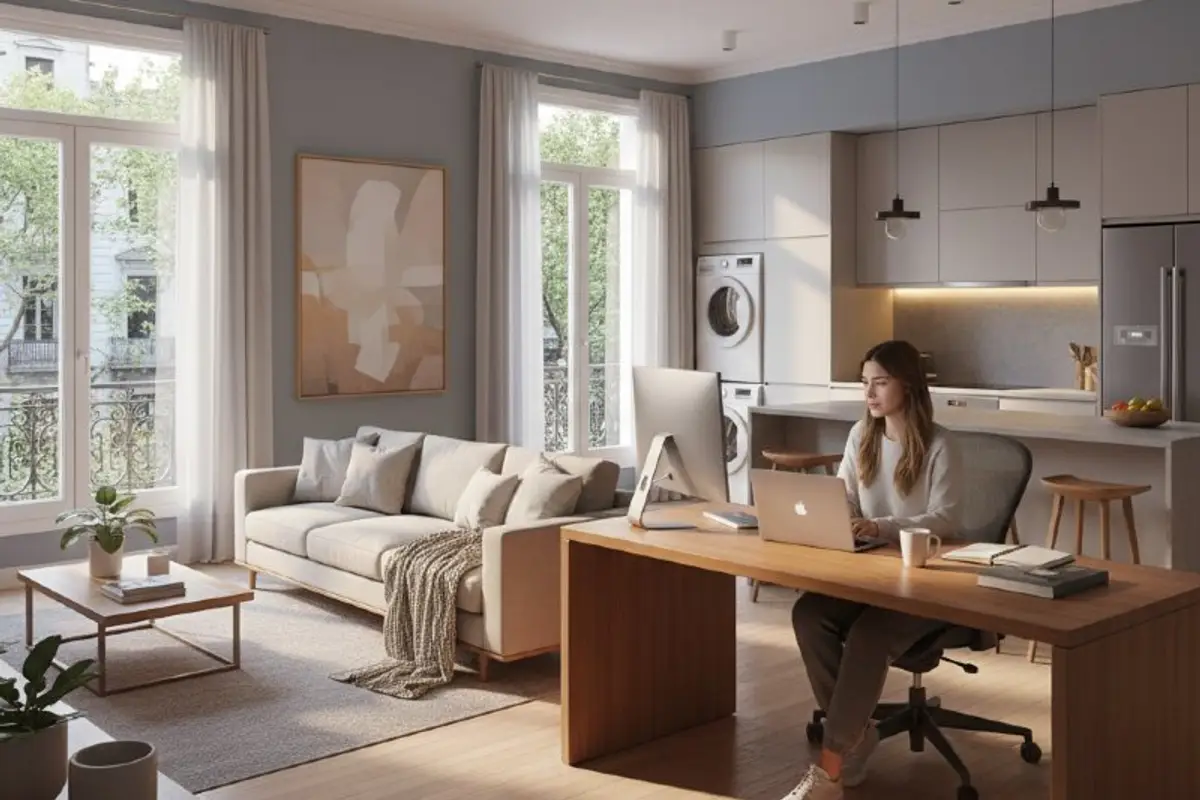
A short-term apartment offers something decisive for long stays: real daily life. Having a private kitchen, refrigerator, washing machine, separate living spaces, and privacy completely changes the experience. It also has a positive impact on the budget, as it helps reduce spending on meals and services.
For those who work remotely or study, the apartment stops being just “accommodation” and becomes a place for work and concentration. Having a comfortable table, good natural light, and a stable internet connection is not a luxury, it is part of everyday life.
In that sense, Buenos Aires has adapted well to this type of demand. The short-term rental market is no longer designed only for tourists, but also for people who need to live, work, and rest over extended periods.
Buenos Aires as a base for remote workers and digital nomads
In recent years, Buenos Aires has become a popular choice for remote workers and digital nomads from across Latin America, Europe, and the United States. The reasons are quite concrete: solid urban infrastructure, reliable connectivity, compatible time zones, and an active cultural scene.
For this profile, short-term rentals play a key role. They allow people to settle in quickly, without complex paperwork, with everything in place from day one. A well-chosen apartment becomes both home and office.
Neighborhoods such as Palermo, Recoleta, and Belgrano tend to work especially well for long stays. They offer quiet cafés for working, nearby coworking spaces, supermarkets, gyms, and a transportation network that makes it easy to move around without relying on a car.
The key factor is not only the neighborhood, but the apartment itself: reliable internet, comfortable spaces, and an environment that supports a productive routine without constant distractions.
What to consider when choosing an apartment for several months
On a long stay, details matter more than they do on a short trip. There are several aspects worth reviewing carefully before booking:
Reliable connectivity
It is not enough for a listing to say “Wi-Fi.” For remote work or study, it is important to ask about speed, stability, and whether the service is included without data caps or usage limits.
Space and ergonomics
Living and working in the same place for months requires more than a small table. A functional living area, good lighting, and a proper chair make a noticeable difference over time.
Silence and surroundings
A beautiful apartment can become uncomfortable if it is located on a noisy avenue. For long stays, rest and concentration are essential.
Included services and consumption limits
Most short-term rentals offer an all-inclusive rate, although reasonable limits on electricity or gas are common. Knowing these details in advance helps avoid surprises.
Flexibility
On long stays, plans can change. The ability to extend or shorten a stay by a few days is often an advantage of short-term rentals compared to other options.
Living like a resident, not like a tourist
One of the greatest benefits of short-term rentals for long stays is the ability to experience Buenos Aires from the inside. Doing grocery shopping in the neighborhood, using public transportation, building a weekly routine, and no longer feeling “just passing through.”
For many people, that experience is central to the reason for the trip. Whether you come for remote work, studies, or a specific stage of life, choosing the right accommodation directly affects how you experience the city.
A well-chosen short-term rental supports that process instead of getting in the way.
A solid base for staying as long as you need
If you are considering a short-term rental in Buenos Aires for a long stay, think of the apartment as a base for daily life, not just a place to sleep. Location, comfort, connectivity, and flexibility are the pillars that make the experience work.
If you are looking for options designed for stays of several months—whether for remote work, studies, medical treatments, or relocation—you can check availability in areas such as Palermo, Recoleta, or Belgrano. A good short-term rental does more than house you: it allows you to live the city with continuity and peace of mind.