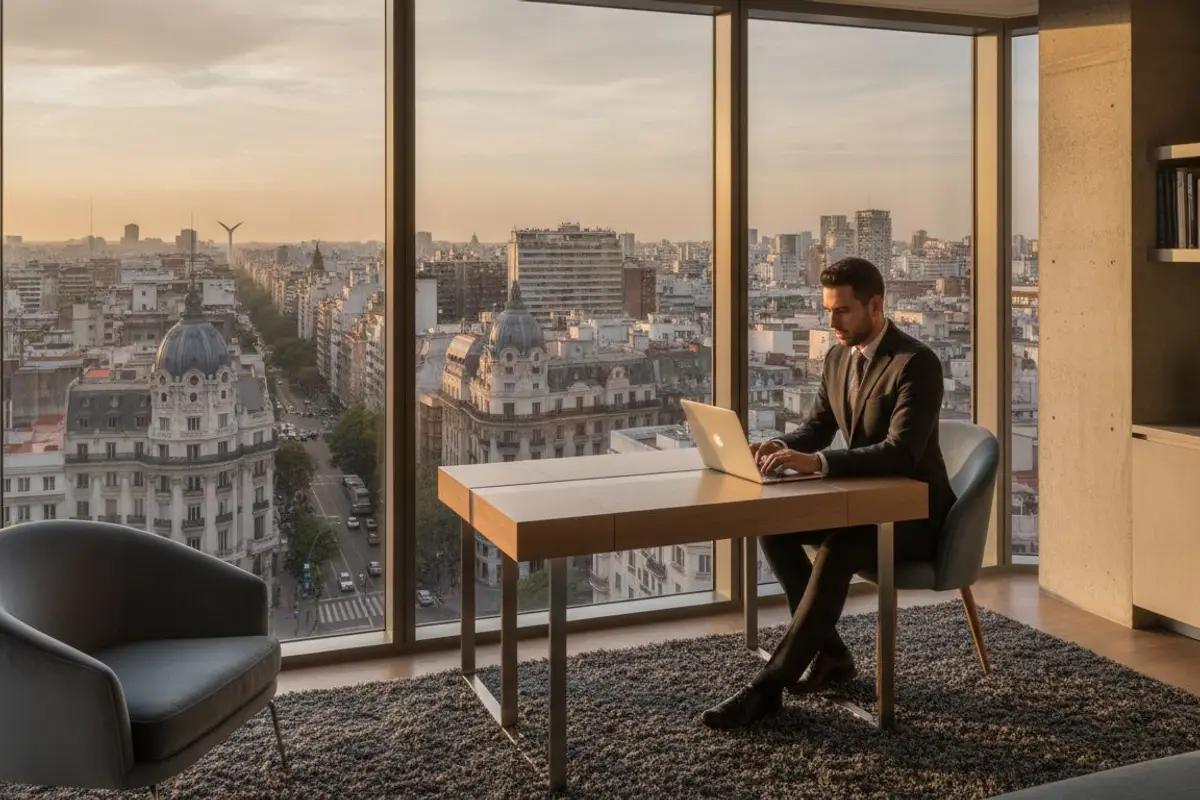
Buenos Aires for Digital Nomads: A Guide to Living and Working Remotely
Who says working from the other side of the world means giving up the comfort of a first-rate office setup? Buenos Aires for digital nomads has become one of the strongest options for remote professionals looking to balance vibrant culture with a productive daily routine.
We know the concerns that usually come with that decision: landing in a new city and discovering unreliable Wi-Fi, choosing an apartment that turns out to be too noisy for video calls, or having to figure out airport transportation and groceries after a long international flight.
In this guide, you’ll learn how to settle into Argentina’s capital with reliable connectivity, comfortable workspaces, and fewer logistical headaches. We’ll walk through the advantages of staying in Palermo or Recoleta, explain what to consider around the digital nomad visa, and show you how to create a setup that lets you enjoy Buenos Aires without compromising your workday.
Your Buenos Aires experience starts here, with the infrastructure and local support your remote lifestyle requires.
Key Takeaways
- Understand the requirements of Argentina’s Digital Nomad Visa and what to prepare before relocating temporarily.
- Choose the neighborhood that best fits your lifestyle, from Palermo’s creative energy to Recoleta’s quieter, more executive atmosphere.
- Discover how to experience Buenos Aires as a digital nomad without spending your first days handling airport transfers, groceries, and other basic logistics.
- Stay productive in professionally managed apartments located near some of the city’s main cultural and entertainment hubs.
- Use a practical checklist for documentation, technology, and accommodations before starting your remote-work stay in Argentina.
Why Choose Buenos Aires as a Digital Nomad?
Buenos Aires is much more than the capital of tango. It has also become a major remote-work destination in the Southern Hemisphere.
For digital nomads, one of the city’s biggest advantages is its combination of urban infrastructure and lifestyle.
Neighborhoods such as Palermo and Recoleta offer widespread fiber-optic internet, strong mobile connectivity, cafés that work well for remote work, coworking spaces, restaurants, parks, and a large international community.
The UTC-3 time zone is another underrated advantage.
It allows you to maintain reasonable overlap with teams in North America while still having some crossover with European working hours, without completely turning your daily schedule upside down.
Buenos Aires also has a social rhythm that makes it easy to settle into city life.
Specialty coffee shops are everywhere, restaurants stay open late, and cultural events happen throughout the week.
Networking often happens naturally, whether you’re working from a café, attending an industry event, or simply meeting people through coworking communities.
Digital Nomad Visa and Legal Requirements
Argentina’s Digital Nomad Visa has made it easier for eligible remote workers to spend an extended period in the country.
According to the information referenced in the original article, the program allows a 180-day stay that may be extended for an additional 180 days.
If you’re considering this digital nomad lifestyle in Argentina, make sure you review the current immigration requirements before applying, including documentation related to remote work and health insurance.
Having the visa and insurance paperwork organized in advance can save you unnecessary complications once you arrive.
Premium Lifestyle vs. Backpacker Budget
Buenos Aires can still work for a wide range of budgets, but if you rely on your laptop for a living, the cheapest option isn’t always the smartest one.
A poorly located apartment, unstable internet, or excessive street noise can cost you much more in lost productivity than you save on rent.
For professionals staying in Buenos Aires as digital nomads, investing in a property with reliable connectivity, a functional desk, and professional local support can make the entire experience noticeably easier.
The goal isn’t simply to find somewhere inexpensive to sleep. It’s to build a living setup that actually supports your work.
The Best Neighborhoods for Digital Nomads: Palermo and Recoleta
Choosing the right neighborhood can shape your entire experience in Buenos Aires as a digital nomad.
You need more than somewhere to sleep. Ideally, you want access to restaurants, cafés, public transportation, green spaces, and cultural activity while still having a home where you can concentrate.
Palermo and Recoleta are two of the most popular choices because they offer different versions of that balance.
Both also put you within relatively easy reach of major entertainment venues such as Movistar Arena, Campo Argentino de Polo, and River Plate Stadium.
That means you can finish your workday and get to a concert or major event without spending the rest of the evening crossing the city.
Palermo: Coworking, Creativity, and Social Life
Palermo Soho and Palermo Hollywood are especially popular with people working in tech, media, design, and other creative fields.
The neighborhood is filled with specialty coffee shops, coworking spaces, restaurants, bars, and independent businesses.
A coffee shop can become your office for the afternoon, while a restaurant or networking event can turn into an opportunity to meet other remote professionals.
If you’re considering a longer stay in the area, our guide to staying in Palermo Chico, Buenos Aires can help you compare neighborhoods, apartments, and practical amenities.
Recoleta: Quiet, Classic, and Business-Friendly
If you prefer quieter streets and a more traditional atmosphere, Recoleta may be a better fit.
The neighborhood combines classic architecture, museums, parks, upscale restaurants, and a more residential feel.
For remote workers with long stretches of video calls or work that requires concentration, that calmer environment can be a major advantage.
Recoleta also works well for executives who want easy access to business areas while staying in one of Buenos Aires’ most established neighborhoods.
Both Palermo and Recoleta offer strong connectivity and relatively convenient transportation.
You can explore corporate and furnished rental options in Buenos Aires to compare which area better matches your work style.
Logistics and Comfort: Making Your Arrival Easier
Most guides about Buenos Aires for digital nomads focus on neighborhoods, cafés, and coworking spaces.
But the first 48 hours matter just as much.
After a long international flight, the last thing you want is to spend your first evening trying to find transportation, buying groceries, troubleshooting Wi-Fi, or contacting an owner who isn’t responding.
The smoother your arrival, the faster you can settle into your normal routine.
Imagine landing at Ezeiza and having transportation already arranged.
Instead of waiting in taxi lines or figuring out a ride with your luggage, a private driver takes you directly to your apartment.
When you arrive, the refrigerator is already stocked and the internet is ready to go.
That’s the kind of setup that lets you unpack, connect your laptop, and get back to work without losing a full day to logistics.
The Value of Boutique Hospitality Services
Professional airport transportation can be especially helpful when you’re traveling with laptops, monitors, cameras, or other valuable work equipment.
It also removes one more unknown from the first day of your stay.
Maintenance and Local Support
When your apartment is also your office, technical support matters.
On a large rental marketplace, getting a broken router or appliance fixed may depend entirely on how responsive the individual owner happens to be.
With professional property management, there is a dedicated team responsible for handling those issues.
Additional cleaning can also be scheduled during longer stays, allowing you to maintain a comfortable home environment without spending your free time managing household chores.
That’s what a better Buenos Aires digital nomad experience should look like: your accommodations support your work instead of creating more work.
Book an apartment with local support and take some of the friction out of your arrival in Argentina.
Planning Your Stay: From Booking to Your First Workday
A successful stay in Buenos Aires as a digital nomad starts before you board the plane.
Remote work depends heavily on your technology and environment, so a little preparation goes a long way.
Before traveling, make sure you’ve covered a few essentials:
- Tech essentials: Bring the correct power adapters for Argentina and consider noise-canceling headphones if you plan to work from cafés or coworking spaces.
- Insurance and documentation: Review the current requirements for the Digital Nomad Visa and make sure your health insurance meets any applicable coverage rules.
- Events and location: If concerts at Movistar Arena or major events are part of your plans, staying in Palermo can significantly reduce transportation time.
There’s a real difference between a basic vacation rental and a professionally managed corporate apartment.
A standard listing may have a dining table that technically doubles as a desk.
A work-oriented property should offer a dedicated workspace, comfortable seating, good lighting, and reliable internet.
That setup makes your first workday in Buenos Aires feel much closer to your normal routine.
Preparing for Remote Work in Argentina
International cards are widely accepted in many parts of Buenos Aires, but Argentina’s financial environment can be unusual for newcomers.
Having local guidance can make day-to-day payments and budgeting easier.
Extending Your Trip to Mendoza
Some remote professionals choose to split their time between Buenos Aires and Mendoza.
After several weeks in the capital, moving to wine country can provide a completely different pace without giving up remote work.
Mendoza and Luján de Cuyo are especially appealing if you want access to vineyards, mountains, and a quieter environment while maintaining connectivity.
The final piece is connecting with the local community.
Palermo Soho has a strong network of coworking spaces, entrepreneurial meetups, and social events where it’s easy to meet other remote workers.
Buenos Aires gives you the infrastructure to keep working while also giving you plenty of reasons to close the laptop at the end of the day.
Make Buenos Aires Your Next Remote-Work Base
Choosing Buenos Aires as a digital nomad destination can give you a strong mix of professional infrastructure, culture, dining, social life, and a time zone that works surprisingly well for international teams.
The key is choosing your accommodation carefully.
A well-located apartment in Palermo or Recoleta with reliable internet and a real workspace can make an enormous difference to your productivity and quality of life.
The same goes for arrival logistics.
You don’t need to spend your first hours in Argentina arranging transportation or hunting for groceries after a long flight.
With professional local support, private transfers, and grocery stocking, much of that can be handled before you arrive.
At MOT Rentals, we focus on furnished and corporate stays in some of Buenos Aires’ most convenient neighborhoods.
Book your apartment in Buenos Aires with MOT Rentals and create a remote-work setup that lets you focus on your projects while actually enjoying the city around you.
Frequently Asked Questions About Remote Work in Argentina
Is Buenos Aires Safe for Digital Nomads?
Buenos Aires is a large city, so safety varies by neighborhood and situation.
Areas such as Palermo and Recoleta are popular with international visitors and remote workers because they combine strong infrastructure with busy commercial and residential areas.
As in any major city, basic precautions are important, especially with laptops, phones, and other expensive equipment.
Choosing a well-managed property in a well-connected area can also make your stay more comfortable.
How Does Argentina’s Digital Nomad Visa Work?
According to the information provided in the original article, Argentina’s Digital Nomad Visa allows eligible remote workers to stay for 180 days, with the possibility of an additional 180-day extension.
Applicants are expected to demonstrate that they provide services to clients or companies outside Argentina and meet the program’s documentation requirements.
Because visa requirements can change, it’s a good idea to confirm the current conditions with Argentina’s immigration authorities before applying.
What Is the Best Neighborhood if I Want to Attend Concerts at Movistar Arena?
Palermo is one of the most convenient areas if you plan to attend events at Movistar Arena.
Palermo Soho and Palermo Hollywood put you relatively close to Villa Crespo, where the venue is located.
That makes it easier to combine your normal work schedule with concerts or other events without spending a large part of the evening in transit.
What Internet Speed Can I Expect in MOT Rentals Apartments?
The original article states an average speed of approximately 120 Mbps in its properties.
MOT Rentals prioritizes fiber-optic connections and work-friendly apartments for remote professionals.
If internet performance is critical to your job, it’s always worth confirming the exact connection and expected speed for the specific apartment before booking.
Can I Have Groceries Waiting in My Apartment Before I Arrive?
Yes.
MOT Rentals offers grocery stocking before check-in so you can arrive with basic food and drinks already in the apartment.
It can be especially useful after a long international flight, when the last thing you want to do is find a supermarket before unpacking.
Is a Short-Term Apartment Better Than a Hotel for Digital Nomads?
For many digital nomads, yes.
A furnished apartment typically gives you more space, a full kitchen, and a separate area where you can work comfortably.
That can make a meaningful difference during stays lasting several weeks or months.
Hotels may still make sense for very short trips, but a professionally managed apartment usually offers more independence for someone trying to maintain a regular work and living routine.